Cutting dies and forming dies are specialized tools used in manufacturing processes, particularly in industries like metalworking, packaging, and plastics. While both are used to shape materials, they serve different purposes and have distinct characteristics. Below is a comparison of the two:
1. Purpose
- Cutting Die:
- Used to cut or shear materials into specific shapes or sizes.
- Typically removes excess material to create a desired outline or pattern.
- Forming Die:
- Used to bend, stretch, or shape materials without removing any material.
- Changes the geometry of the material to create 3D forms or contours.
2. Operation
- Cutting Die:
- Applies high pressure to shear or slice through the material.
- Often used in punching, blanking, or die-cutting processes.
- Forming Die:
- Applies controlled force to deform the material into a new shape.
- Commonly used in processes like bending, stamping, deep drawing, or extrusion.
3. Tool Design
- Cutting Die:
- Features sharp edges or blades to cleanly cut through materials.
- May include male and female components that work together to shear the material.
- Forming Die:
- Designed with contours, cavities, or molds to shape the material.
- Often includes punches and dies that work together to deform the material.
4. Material Interaction
- Cutting Die:
- Removes material, resulting in scrap or waste.
- Leaves a clean edge on the cut piece.
- Forming Die:
- Does not remove material; instead, it reshapes the existing material.
- May introduce stresses or thinning in the material during deformation.
5. Applications
- Cutting Die:
- Used in industries like packaging (e.g., cutting cardboard, labels, or foils).
- Common in metalworking for blanking, punching, or trimming parts.
- Used in textiles for cutting fabric patterns.
- Forming Die:
- Used in automotive manufacturing to create body panels or structural components.
- Common in appliance manufacturing for shaping metal or plastic parts.
- Used in packaging to create 3D containers or trays.
6. Complexity
- Cutting Die:
- Generally simpler in design, focusing on precise edges and clean cuts.
- May require less maintenance due to fewer moving parts.
- Forming Die:
- More complex, as it must account for material flow, stretching, and thinning.
- Requires precise alignment and often involves multiple stages for complex shapes.
7. Material Compatibility
- Cutting Die:
- Works well with a wide range of materials, including paper, cardboard, plastics, metals, and fabrics.
- Suitable for both thin and thick materials, depending on the die design.
- Forming Die:
- Best suited for ductile materials that can be deformed without cracking, such as metals, plastics, and certain composites.
- Less effective for brittle materials that may fracture during forming.
8. Precision and Tolerances
- Cutting Die:
- High precision is required to achieve clean cuts and accurate dimensions.
- Tolerances are critical, especially for intricate designs.
- Forming Die:
- Precision is important to ensure consistent shapes and avoid defects like wrinkling or tearing.
- Tolerances must account for material springback (elastic recovery after forming).
9. Cost
- Cutting Die:
- Generally lower cost for simpler designs.
- Higher costs for intricate or multi-cavity dies.
- Forming Die:
- Typically more expensive due to complex designs and the need for precise alignment.
- Multi-stage forming dies can significantly increase costs.
10. Maintenance
- Cutting Die:
- Requires sharpening or replacement of cutting edges over time.
- Less prone to wear compared to forming dies.
- Forming Die:
- Requires regular maintenance to address wear, especially in high-stress areas.
- May need polishing or resurfacing to maintain surface quality.
11. Examples
- Cutting Die:
- A die used to cut out cardboard shapes for packaging.
- A punch press die for creating holes in metal sheets.
- Forming Die:
- A die used to stamp a car door panel from a flat metal sheet.
- A mold for creating plastic bottles through blow molding.
Here’s a table summarizing the key differences between cutting dies and forming dies:
| Aspect | Cutting Die | Forming Die |
|---|---|---|
| Purpose | Cuts or shears materials into specific shapes. | Bends, stretches, or shapes materials into 3D forms. |
| Operation | Shears or slices through material. | Deforms material without removing it. |
| Tool Design | Sharp edges or blades for clean cuts. | Contours, cavities, or molds for shaping. |
| Material Interaction | Removes material, creating scrap. | Reshapes material without removing it. |
| Applications | Packaging (cardboard, labels), metalworking (blanking, punching), textiles. | Automotive (body panels), appliances, packaging (3D containers). |
| Complexity | Simpler design, focusing on clean cuts. | More complex, accounting for material flow and deformation. |
| Material Compatibility | Works with paper, cardboard, plastics, metals, fabrics. | Best for ductile materials like metals and plastics. |
| Precision | High precision for clean cuts and dimensions. | Precision needed to avoid defects like wrinkling or tearing. |
| Cost | Lower cost for simpler designs. | Higher cost due to complex designs and alignment. |
| Maintenance | Requires sharpening or edge replacement. | Regular maintenance for wear and surface quality. |
| Examples | Cutting cardboard shapes, punching holes in metal. | Stamping car door panels, blow molding plastic bottles. |
Conclusion
- Cutting Dies are used to cut or shear materials into specific shapes, producing clean edges and removing excess material. They are simpler in design and ideal for applications requiring precise outlines or patterns.
- Forming Dies are used to bend, stretch, or shape materials into 3D forms without removing material. They are more complex and suited for creating contoured or structural components.
The choice between cutting dies and forming dies depends on the desired outcome, material type, and production requirements. Cutting dies are best for creating flat shapes, while forming dies are used to create complex, three-dimensional parts.
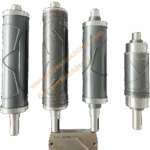
Gerson manufactured a wide range of custom dies, including steel rule die, pre-sharp die, forging die,machined die,rotary die ,match-metal die ,scrap removal cutting die,hole punch, creasing, thermal, embossing etc.,
Related Products: