
Die Cutting Press
Manufacturer & Supplier
38+ Years
Factory Direct Sale and Support
100% Checked Before Delievery
Your Trust Die Cutting Press Manufacturer
Gerson has been a top manufacturer of die-cutting presses for over 38 years, serving businesses with both our renowned Gerson brand and OEM solutions.
We bring nearly four decades of hands-on expertise and refined craftsmanship to every single press we build, meticulously custom-engineering machines to precisely fit your exact production needs and operational demands. Your satisfaction isn’t just a goal; it’s our absolute driving force and the core of our business philosophy.
We’re deeply dedicated to providing cutting-edge, high-performance die-cutting press machines that empower businesses of any size to achieve their production goals with efficiency and precision.
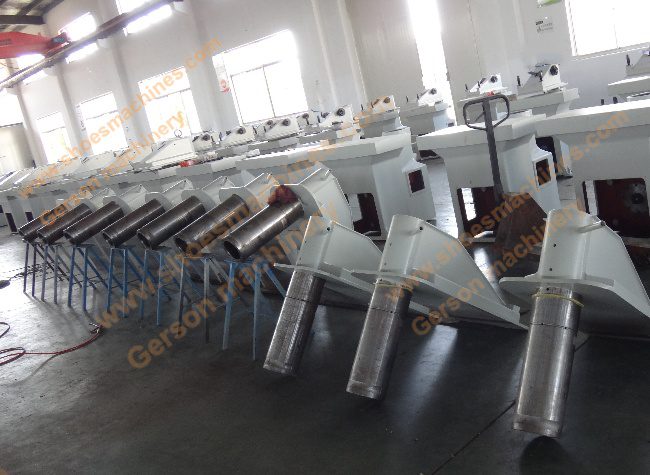
Gerson Clicker Press Features
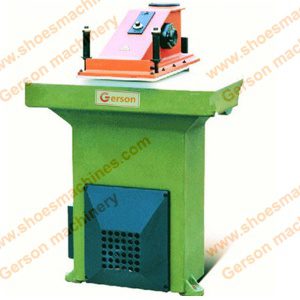
Gerson clicker press is a machine used primarily for cutting materials like leather, fabric, rubber, foam, paper, and plastics into precise shapes using steel dies.
- Fast: It cuts many shapes much quicker than cutting by hand.
- Accurate: Every piece comes out the exact same size and shape, perfectly.
- Less Waste: Because cuts are precise, you use less material.
- Easy to Use: Once set up, it’s simple to operate, often with just a button.
- Less Effort: No more tiring hand cutting; the machine does the hard work.
- Safer: Reduces the risk of cutting yourself compared to knives.
- Consistent Quality: All your products will look uniform and professional.
- Works on Many Materials: Great for leather, fabric, foam, plastic, and more.
- Quiet: Many models run very quietly, making for a nicer workshop.
Gerson Traveling Head Press Features
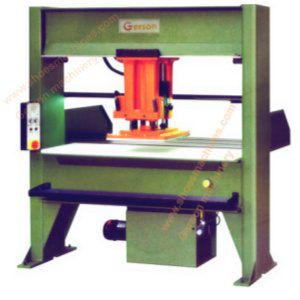
Gerson traveling head press is a type of die cutting press that uses a moving head to cut shapes. It can cut small to medium-sized items from materials fed either manually or automatically, in both sheet and roll forms, using standard cutting dies.
- Versatile: Can cut many different shapes and sizes of materials.
- Handles Big Sheets/Rolls: Great for cutting from very wide sheets or long rolls of material.
- Less Material Movement: The head moves, not the material, which can be good for sticky or delicate items.
- Good for Medium Parts: Ideal for cutting parts that aren’t too big or too small.
- Easy to Load: Often easier to load large materials compared to other press types.
- Flexible: Can be used for both manual feeding (operator places material) and automatic feeding (machine pulls material).
- Accurate Cuts: Delivers consistent and precise cuts across the entire material.
- Works with Standard Dies: You can use common cutting dies, which is cost-effective.
- Efficient: Helps speed up production for many cutting tasks.
- Consistent Pressure: Applies even cutting pressure wherever the head moves, ensuring quality.
Gerson Beam Press Features
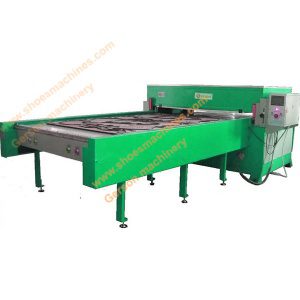
Gerson beam press, also known as a full beam press or flatbed press, is a type of die cutting press used for cutting shapes from various materials. It features a large, fixed upper beam (or platten) that moves straight down to apply pressure across the entire cutting area.
- High Power: They can apply a lot of cutting force, allowing them to cut tough or thick materials.
- Large Cutting Area: Perfect for cutting very big shapes or many smaller shapes all at once.
- Fast Cycles: Because the entire cutting area is pressed at once, it can be very quick for high-volume production.
- Uniform Pressure: The fixed beam ensures even pressure across the entire die, leading to consistent and clean cuts.
- Cuts Multiple Layers: With high power, they can often cut through several layers of material in a single stroke, boosting productivity.
- Good for Large Dies: Accommodates very large cutting dies, which might not fit on other types of presses.
- Stable and Robust: Typically built very solid and sturdy, designed for heavy-duty, continuous operation.
- Automated Feeding Options: Many models can integrate easily with automated feed systems (like conveyors) for higher efficiency.
- Versatile Materials: Capable of cutting a wide range of non-metallic materials, including leather, foam, textiles, rubber, gaskets, and more.、High Precision: Despite the large cutting area, they deliver precise cuts, ensuring product consistency.
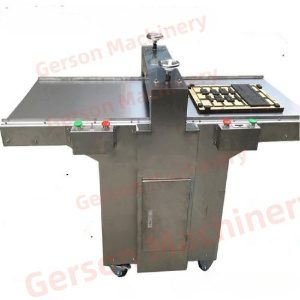
Gerson roller die cutting press (also called a roller die cutter or flatbed die cutting press) is your go-to machine for short-run die-cutting projects. It uses a hardened roller over a flatbed surface to precisely cut soft and semi-rigid materials into specific shapes and patterns, working perfectly with cutting dies, including steel rule dies.
- Cost-Effective for Short Runs: Generally less expensive to set up and run for smaller batches compared to some other high-volume die cutters.
- Versatile Material Handling: Excellent for a wide range of soft and semi-rigid materials like leather, fabric, foam, paper, felt, rubber, and plastics.
- Simple Operation: Often very user-friendly, making it easy for operators to learn and use effectively.
- Quick Setup/Changeover: Dies can usually be changed out relatively quickly, making it efficient for switching between different projects.
- Clean Cuts: The rolling action provides a smooth, precise cut with clean edges, reducing the need for post-cutting cleanup.
- Low Maintenance: With fewer complex moving parts than some other press types, roller die cutters tend to require less maintenance.
- Less Noise: Many roller presses operate with less noise compared to “clicker” or “beam” presses, creating a quieter work environment.
- Works with Standard Dies: Compatible with common steel rule dies, which are relatively inexpensive to produce.
- Good for Intricate Shapes: The precision of the roller can handle detailed and complex patterns effectively.
- Safe to Operate: Designed with safety features that make them generally safer than manual cutting methods
Gerson Hydraulic Press Features
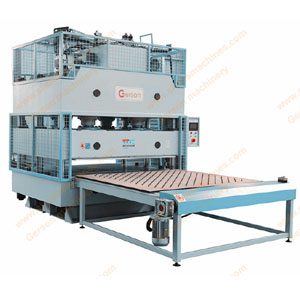
Gerson hydraulic press is a machine that uses the power of a confined fluid (usually oil) to generate a massive amount of compressive force.Hydraulic presses are incredibly versatile and are used across a vast range of industries for various heavy-duty tasks:Metal Forming,Compacting and Baling,Molding,Assembly and Disassembly,Punching and Cutting,Scrap Recycling,Testing and Research etc.,
- Huge Force: Generates massive power for heavy jobs.
- Full Power Stroke: Delivers maximum force anywhere in its movement.
- Adjustable: Precise control over force, speed, and time.
- Safe from Overload: Automatically protects itself from too much pressure.
- Very Versatile: Can form, mold, cut, assemble, and more.
- Longer Tool Life: Gentle operation extends the life of your dies.
- Quiet: Runs more silently than many other press types.
- Cost-Effective: Often cheaper for the power it offers.
- Easy Setup: Quick to change dies and get started.
- Consistent Results: Provides steady pressure for uniform products.
Die Cutting Press Aplication
Industry | Application | Material Examples | Common Machinery Types |
Packaging & Printing | Custom boxes, labels, cartons, envelopes, displays, tags, inserts | Cardboard, paperboard, corrugated, adhesive labels, plastic films | Flatbed Press, Rotary Press, Beam Press (for large runs), Roller Press |
Automotive | Gaskets, seals, interior components (dashboards, seating), insulation, vibration dampeners, metal forming, stamping, deep drawing | Rubber, foam, textiles, composites, leather, non-woven fabrics, sheet metal, alloys | Beam Press, Traveling Head Press, Hydraulic Press, Roller Press |
Textiles & Footwear | Apparel patterns, shoe soles, fabric components, insoles, leather goods | Fabric (cotton, denim, felt, synthetic), leather, foam, rubber | Swing Arm Press, Traveling Head Press, Beam Press, Roller Press |
Electronics | Insulators, EMI shielding, thermal pads, gaskets, protective films, component housing, component assembly, compaction | Foams, films (polycarbonate, polyester), rubber, conductive materials, adhesives, powders, small electronic components | Flatbed Press, Rotary Press, Traveling Head Press, Hydraulic Press |
Medical | Medical disposables, sterile packaging, wound care, wearable sensors, diagnostic strips, precision molding, compacting pharmaceuticals | Foams, films, non-woven fabrics, hydrogels, medical-grade adhesives, medical powders, plastics | Flatbed Press, Rotary Press (for high volume), Hydraulic Press |
Gasket & Sealing | Custom gaskets, seals, washers | Rubber, cork, felt, non-asbestos materials, PTFE, graphite, foam | Beam Press, Traveling Head Press, Hydraulic Press, Roller Press |
Abrasives | Sanding discs, grinding pads | Abrasive sheets, backing materials | Flatbed Press, Roller Press |
Crafting & Hobby | Scrapbooking elements, greeting cards, decorative items, paper crafts | Paper, cardstock, felt, thin foam, vinyl | Manual/Desktop Die Cutters, Smaller Roller Presses |
Other Industrial | Filters, insulation, sound dampening, protective components, material compaction, straightening, assembly | Various foams, felts, plastics, thin metals, composite materials, scrap metal, various industrial components | Beam Press, Traveling Head Press, Hydraulic Press, Roller Press |
Die Cutting Press : Definitive Guide
A die cutting press is a machine used in various manufacturing processes to cut material into specific shapes or designs. It operates by using a die, which is a specialized tool or mold, that applies pressure to cut through sheets of material such as paper, cardboard, plastic, or metal.
Key Features:
- Mechanism: The press usually employs mechanical, hydraulic, or pneumatic systems to apply significant force, enabling it to cut through thick or layered materials.
- Versatility: Die cutting presses can produce various shapes and designs, making them widely used in industries such as packaging, textiles, crafting, and automotive.
- Adjustable pressure: Control force for clean cuts or embossing.
- Interchangeable dies: Switch dies for different shapes and designs.
- Manual or automatic: Operate by hand or with automation for efficiency.
- Secure work surface: Holds material steady during cutting.
- Clamping mechanism: Keeps material and die in place.
- Various sizes: Fits different material dimensions.
- Safety features: Protect users with stops and guards.
- Easy to use/maintain: Simple controls and accessible parts.
- Embossing/debossing: Creates textured patterns if needed.
- Durable build: Made to last with sturdy materials.
Materials and Applications:
Die Cutting presses can cut a wide range of materials, including:
- Felt
- Paper & Cardboard
- Sponge or Foam
- Cork
- Plastic
- Leather
- Rubber
- Fiber
- Composites
- Fabric & Textiles
- Metal
- Steel
- Cast Iron
- Aluminum
- Stainless Steel
- Bronze:
They are used to create a diverse range of products, such as:
- Shoes
- Bags
- Gloves
- Packaging
- Gaskets
- Puzzles
- Slippers
- Pads & Mats
- Auto Parts
- And many more
The future of die cutting presses includes:
- Automation: Increased use of robotic and AI-powered systems for faster, precise operations.
- Digital Integration: Smart machines with digital controls and connectivity for real-time monitoring.
- Sustainability: Eco-friendly materials and energy-efficient designs.
- Customization: Greater flexibility for small batch and custom projects.
- Advanced Materials: Cutting and embossing tougher, new materials with precision.
- Compact Designs: Smaller, portable machines for versatile use.
Die-Cutting Press Applications
Die-cutting presses are invaluable machines for precisely cutting, shaping, and even scoring a wide array of materials. They excel at producing identical parts efficiently and accurately, making them essential across many sectors.
Industry | Key Applications | Common Materials Processed | Why Die-Cutting is Used | Typical Die-Cutting Press Types Used |
Packaging | Box Creation: Folding cartons, rigid boxes, chipboard boxes. Labels and Tags: Product labels, tags. | Paper, paperboard, corrugated, plastic films, adhesive labels | To achieve unique designs, precise folding lines, and consistent branding. | Flatbed, Rotary, Beam, Roller |
Textile & Apparel | Fabric Cutting: Multiple layers for clothing, upholstery, accessories. Pattern Making: Intricate designs. | Fabric (cotton, denim, felt, synthetic), leather, foam, rubber | To ensure uniform sizing, reduce material waste through nesting, and speed up production. | Swing Arm, Traveling Head, Beam, Roller |
Printing | Business Cards & Brochures: Cuts and finishes printed materials. Posters & Displays: Custom shapes for promotional materials. | Paper, cardstock, corrugated, plastic films, adhesive labels | For precise cuts and finishes, creating custom shapes and enhancing visual appeal. | Flatbed, Rotary, Beam, Roller |
Arts & Crafts | Hobby Projects: Scrapbooking, card making, DIY. Stencils: For painting, airbrushing, crafting. | Paper, cardstock, felt, thin foam, vinyl | To create intricate shapes and complex designs not easily achievable by hand. | Manual/Desktop Die Cutters, Smaller Roller Presses |
Electronics & Automotive | Component Parts: Gaskets, insulation, electrical/automotive components. Protective Covers: For sensitive equipment. Metal Forming: Stamping, deep drawing. | Foams, films, conductive materials, rubber, adhesives, sheet metal, alloys | For precise, intricate cuts for perfect fits, insulation, and structural integrity. | Flatbed, Rotary, Traveling Head, Hydraulic |
Construction & Signage | Sign Making: Road signs, banners, informational signage. Insulation Panels: Precise insulation for construction. | Plastics, acrylics, vinyl, foam, corrugated, various composites | To produce custom shapes for clear messaging and precise dimensions for construction materials. | Beam, Traveling Head, Hydraulic, Roller |
Medical & Healthcare | Medical disposables, wound care, sterile packaging, diagnostic strips, precision molding | Medical-grade foams, films, non-wovens, hydrogels, medical adhesives, powders, plastics | To meet stringent hygiene, precision requirements, and ensure critical functionality. | Flatbed, Rotary, Hydraulic |
Gasket & Sealing | Custom gaskets, seals, washers | Rubber, cork, felt, non-asbestos materials, PTFE, graphite, foam | To create precise, durable seals that prevent leaks and ensure optimal performance. | Beam, Traveling Head, Hydraulic, Roller |
Abrasives | Sanding discs, grinding pads | Abrasive sheets, backing materials | For consistent shapes and sizes required for effective and safe abrasive products. | Flatbed, Roller |
General Industrial | Filters, sound dampening, protective components, material compaction, straightening | Various foams, felts, thin metals, composite materials, scrap metal | For efficient, accurate mass production of uniform industrial components. | Beam, Traveling Head, Hydraulic, Roller |
Main Parts of a Die-Cutting Press
1. The Press Frame / Structure
This is the main body of the machine, providing stability and housing all other components. It’s built to withstand the immense forces involved in the cutting process.
2. The Press Mechanism (Power Source)
This is what generates and delivers the cutting force. It varies significantly by press type:
Hydraulic System: Uses fluid pressure (oil) to move a piston and apply force (common in hydraulic presses, traveling head presses, and beam presses).
Mechanical System: Uses motors, flywheels, gears, and cranks to create the cutting force (found in some traditional presses).
Roller System: Uses hardened rollers to apply pressure as material and die pass between them (in roller die cutters and rotary presses).
3. The Ram / Platens / Cutting Head
This is the moving part that directly applies the force to the die.
In flatbed presses (like beam presses), it’s a large, flat upper platen that moves straight down.
In swing arm presses, it’s a “swinging arm” or head that moves over the material.
In traveling head presses, the entire cutting head moves across the material.
In rotary presses, this might refer to the cutting cylinder itself.
4. The Cutting Die (Tooling)
This is the “cookie cutter” of the operation – the custom-made tool that defines the shape being cut.
Steel Rule Dies: The most common type, made from sharp steel blades bent into the desired shape and set into a base (often wood).
Solid Dies: Machined from a solid block of steel (often used in rotary or high-precision applications).
Flexible Dies: Thin metal sheets with etched cutting edges, used on magnetic cylinders (common in rotary presses).
5. The Cutting Bed / Anvil
This is the flat, stable surface where the material is placed and against which the die presses.
It’s often made of a durable, sacrificial material (like a poly cutting board) to protect the press itself and extend die life.
In rotary presses, this is often an opposing anvil cylinder.
6. Material Feeding System
This mechanism moves the material into and out of the cutting area.
Manual Feeding: An operator places the material by hand.
Automatic Feeding: Systems like conveyors, clamps, or rollers feed material from rolls (web) or stacks of sheets into the press.
7. Ejection System (Often Part of the Die)
Typically, resilient rubber strips are strategically placed around the cutting blades within the die. After the cut, these strips expand, gently pushing the cut part out of the die and preventing it from sticking.
8. Control System
This includes the operator interface, buttons, sensors, and programming that control the press’s functions, such as stroke length, speed, pressure, and safety features.
These parts work together to execute the die-cutting process, transforming raw material into precisely shaped components.
the following are the core parts common to most die-cutting operations:
Main Part | Function / Description | Examples / Variations |
1. Press Frame / Structure | The main body of the machine, providing essential stability and housing all other components. It’s built to withstand immense cutting forces. | Robust steel framework; forms the rigid base of the press. |
2. Press Mechanism | The system that generates and delivers the cutting force. This is the power source of the press. | Hydraulic System: Uses fluid pressure (oil). Mechanical System: Uses motors, flywheels, gears. Roller System: Uses hardened rollers. |
3. Ram / Platens / Cutting Head | The moving part that directly applies the force from the press mechanism to the cutting die. | Large flat platen (beam presses); swinging arm (swing arm presses); moving head (traveling head presses); cutting cylinder (rotary presses). |
4. Cutting Die (Tooling) | The custom-made tool that defines the specific shape or pattern to be cut. It’s like a cookie cutter for industrial materials. | Steel Rule Dies: Sharp blades set in a base (common). Solid Dies: Machined from solid steel. Flexible Dies: Thin etched metal for rotary use. |
5. Cutting Bed / Anvil | The flat, stable surface where the material is placed and against which the die presses to make the cut. | Often a durable, sacrificial poly cutting board; an opposing anvil cylinder in rotary presses. |
6. Material Feeding System | The mechanism responsible for moving the material into and out of the cutting area. | Manual feeding (operator places material); automatic feeding (conveyors, clamps, rollers from rolls or stacks). |
7. Ejection System | Components (often part of the die itself) that help remove the cut part or waste material from the die after cutting. | Resilient rubber strips within the die that push out the cut piece. |
8. Control System | The interface and electronics that allow operators to manage the press’s functions and ensure safe operation. | Operator panels, buttons, sensors, programmable logic controllers (PLCs) for speed, pressure, and stroke. |
A die cutting press uses a shaped tool (die) and applies pressure to cut or emboss materials like paper, fabric, or metal. The material is placed on the press, aligned with the die, then pressure is applied—either mechanically, hydraulically, or pneumatically—to cut or shape the material. After pressing, the finished piece is removed.
Here’s a step-by-step breakdown of how a die-cutting press generally works, focusing on the common flatbed or beam press type:
The Core Principle: The die-cutting process involves pressing a sharp, custom-shaped cutting die (made of steel blades set in a board, or a solid metal form) against a material that rests on a stable cutting bed. Sufficient force is applied to cause the die to cut through the material, creating the desired shape.
The Steps:
Die Preparation (Tooling):
A custom die is created for the specific shape or pattern needed. Most commonly, this is a steel rule die, where sharp steel blades are bent and inserted into a wood or metal base. The blades define the cutting edge.
Often, ejection rubber (foam or rubber strips) is placed around the cutting blades within the die. This rubber helps to push the cut part and any scrap material out of the die after the cut, preventing sticking.
Material Placement:
The material to be cut (e.g., sheets of paper, rolls of fabric, panels of foam, etc.) is placed onto the cutting bed (or anvil) of the press. This bed is typically a flat, durable surface, often made of a sacrificial material like polypropylene or nylon, to protect the press itself from the die blades.
Depending on the press, material feeding can be manual (an operator positions each piece) or automatic (a feeder system, like rollers or a conveyor, moves material from a roll or stack).
Die Positioning:
The cutting die is secured either to the ram/platen (the moving upper part of the press) or is carefully positioned by the operator on top of the material on the cutting bed.
The Cutting Stroke (Applying Pressure):
The press’s power mechanism (hydraulic, mechanical, or roller-based) activates.
The ram/platen/cutting head descends, applying significant, controlled pressure.
The cutting die, positioned between the descending ram and the stationary cutting bed, is forced down through the material. The sharp edges of the die slice cleanly through the material.
Ejection and Material Removal:
Once the cut is complete, the ram retracts.
The ejection rubber within the die expands, pushing the cut parts out of the die cavity.
Cut parts and scrap material are then removed from the cutting area. This can be manual or automated, with scrap often collected separately.
Variations in Operation by Press Type:
Hydraulic Presses: Use fluid pressure for consistent, powerful, and adjustable force throughout the stroke. Ideal for thicker or tougher materials.
Mechanical Presses: Use mechanical linkages (crankshafts, flywheels) for high-speed, repetitive cycles. Often used for lighter materials.
Swing Arm Presses: The cutting head (arm) swings over the material/die, often manually positioned. Common for smaller batches or intricate cuts.
Traveling Head Presses: The cutting head moves along a beam over the material, allowing cuts across larger areas without moving the entire material.
Roller Die Cutters: Material and die pass between two hardened rollers, where the pressure of the rollers causes the cut. Excellent for continuous feeding and thin materials.
Rotary Die Cutters: Use cylindrical dies and anvil rollers for continuous, high-speed cutting of materials fed from rolls (webs). Perfect for labels and high-volume flexible materials.
Regardless of the specific type, the fundamental concept remains: precise force, a custom die, and a stable cutting surface combine to repeatedly and accurately produce desired shapes.
Disadvantages of Die Cutting Presses: A Detailed Look
While die cutting presses are invaluable for precision and efficiency in manufacturing, they do come with significant drawbacks that businesses must carefully consider. Understanding these challenges is key to making informed decisions about their integration into production processes.
1. High Initial Costs
The upfront financial commitment for die-cutting operations can be substantial.
Capital Investment: Purchasing a die-cutting press, especially a high-quality or industrial-grade model with advanced automation, represents a considerable capital outlay. This barrier can be particularly challenging for smaller businesses or startups with limited budgets.
Custom Die Costs: Beyond the machine itself, creating the specialized cutting dies adds another layer of expense. Each unique shape or design requires a custom-engineered die, and the more intricate or larger the pattern, the higher the manufacturing cost. These tooling costs can quickly accumulate if a business deals with a wide variety of product designs.
2. Limited Flexibility
The very nature of die-cutting, which relies on fixed tooling, introduces certain rigidities.
Die-Specific Design: Once a die is manufactured, its design is permanent. If a product design changes, even slightly, or if a different shape is needed, a completely new die must be created. This process is both time-consuming and expensive, making die-cutting less ideal for projects with frequent design revisions, prototype development, or very short production runs where the tooling cost can’t be amortized.
Material Constraints: While die-cutting presses are versatile, they aren’t universally suitable for all materials. Extremely hard, very thick, or exceptionally brittle materials can pose challenges. They might cause excessive wear on the dies, lead to incomplete or imprecise cuts, or even damage the press. Materials that easily fray can also be problematic, requiring specialized dies or post-processing.
3. Maintenance and Wear
Like any industrial machinery, die-cutting presses require ongoing attention.
Die Wear and Tear: The sharp edges of cutting dies naturally dull over time, especially with frequent use or when cutting abrasive materials. Dull dies lead to poor cut quality, requiring either sharpening (which reduces die life) or complete replacement. This adds to recurring maintenance costs and can cause production interruptions.
Machine Maintenance: The presses themselves require regular maintenance to ensure optimal performance and longevity. This includes routine lubrication, calibration, inspection of hydraulic or mechanical components, and replacement of worn parts. Neglecting maintenance can lead to breakdowns, costly repairs, and extended periods of unplanned downtime, significantly impacting production schedules.
4. Setup Time
Preparing a die-cutting press for a new job can be a meticulous process.
Preparation and Alignment: Setting up a new die, especially a complex one, and precisely aligning the material on the cutting bed can be time-consuming. Operators need to ensure perfect registration to achieve accurate cuts and minimize waste.
Fine-Tuning Adjustments: Different materials or thicknesses often require adjustments to the press’s pressure, stroke depth, or speed. This fine-tuning process can involve trial and error, adding to the overall setup time before production can begin efficiently.
5. Space Requirements
Die-cutting presses, particularly larger industrial models designed for high-volume production, demand a significant physical footprint. This includes not just the machine’s dimensions but also adequate space for material loading, unloading, scrap removal, and operator movement. For facilities with limited available floor space, this can be a major constraint.
6. Skill Requirements
Operating a die-cutting press isn’t always a simple task.
Operator Expertise: Effective operation requires skilled personnel who understand the machine’s mechanics, the properties of different materials, and the nuances of die setup and alignment. They also need to be well-versed in safety protocols. Providing the necessary training for operators can be time-consuming and costly.
7. Material Waste
Despite efforts to optimize material usage, scrap generation is an inherent part of the die-cutting process.
Scrap Generation: Material around the cut shapes, as well as any internal cut-outs (slugs), becomes waste. While advanced nesting software can minimize this, it cannot eliminate it entirely. This waste increases material costs and contributes to environmental impact, requiring proper disposal or recycling.
8. Speed Limitations
While generally efficient, the actual production speed can have its limits.
Complexity and Material Dependence: The speed at which a press can operate is influenced by the complexity of the die design, the type and thickness of the material being cut, and the overall capabilities of the specific press model. Highly intricate designs or very thick materials might require slower press cycles. Achieving very high speeds, especially for continuous operations, often necessitates more advanced and expensive rotary or automated flatbed equipment.
9. Safety Concerns
The powerful nature of die-cutting presses means safety is paramount.
Operational Hazards: The high pressure, powerful moving parts (like the ram or swing arm), and extremely sharp dies pose inherent safety risks to operators. Without proper safety measures, interlocks, machine guarding, and thorough operator training, there’s a risk of severe injury.
Summary Table: Disadvantages of Die-Cutting Presses
Disadvantage Category | Key Points |
High Initial Costs | – Significant capital investment for machinery. |
Limited Flexibility | – Designs are fixed per die; changes require new, costly dies. |
Maintenance & Wear | – Dies dull over time, needing sharpening/replacement. |
Setup Time | – Time-consuming die setup and material alignment. |
Space Requirements | – Larger industrial models require substantial floor space. |
Skill Requirements | – Needs trained, skilled operators for safe and efficient use. |
Material Waste | – Inherent scrap generation around cut parts. |
Speed Limitations | – Production speed can be limited by design complexity, material type, and press capabilities. |
Safety Concerns | – High pressure, moving parts, and sharp dies pose significant operational hazards without proper precautions. |
Choosing a Gerson Die Cutting Press can be advantageous for several reasons, as Gerson is a well-known and respected brand in the die-cutting industry. Here are the key reasons why you might choose a Gerson die-cutting press:
1. High-Quality Construction
- Durability: Gerson presses are built with robust materials and precision engineering, ensuring long-lasting performance even under heavy use.
- Reliability: Known for their consistent and reliable operation, Gerson presses minimize downtime and maintenance issues.
2. Precision and Accuracy
- Advanced Technology: Gerson presses are designed to deliver precise cuts, creases, and perforations, ensuring high-quality results for intricate designs.
- Consistency: They maintain accuracy across large production runs, which is critical for industries like packaging and printing.
3. Versatility
- Wide Range of Applications: Gerson presses can handle various materials, including paper, cardboard, foam, plastics, and textiles, making them suitable for multiple industries.
- Customizable Dies: They support custom dies for unique shapes and designs, catering to specific project requirements.
4. Efficiency and Productivity
- High-Speed Operation: Gerson presses are designed for fast production cycles, increasing throughput and reducing lead times.
- Automated Features: Many models include automation features like automatic feeding and ejection systems, further enhancing efficiency.
5. Ease of Use
- User-Friendly Controls: Gerson presses often come with intuitive control panels and adjustable settings, making them easy to operate even for less experienced users.
- Quick Setup: Simplified setup processes reduce preparation time and allow for faster transitions between jobs.
6. Safety Features
- Built-In Safety Mechanisms: Gerson presses include safety guards, emergency stop buttons, and other features to protect operators during use.
- Compliance: They adhere to industry safety standards, ensuring a safe working environment.
7. After-Sales Support
- Customer Service: Gerson is known for its excellent customer support, providing assistance with installation, training, and troubleshooting.
- Warranty and Maintenance: Many Gerson presses come with warranties and maintenance plans, ensuring long-term reliability.
8. Reputation and Trust
- Industry Leader: Gerson has a strong reputation in the die-cutting industry, with decades of experience and a track record of delivering high-quality machines.
- Customer Satisfaction: Many businesses trust Gerson for their die-cutting needs due to their consistent performance and reliability.
9. Innovation
- Cutting-Edge Technology: Gerson continuously innovates its products, incorporating the latest advancements in die-cutting technology to improve efficiency and precision.
- Sustainability: Some models are designed to minimize material waste, aligning with eco-friendly manufacturing practices.
Here’s a structured overview of the reasons to choose a Gerson Die Cutting Press, presented in a table format:
| Feature | Description | Benefits |
|---|---|---|
| High-Quality Construction | Built with robust materials and precision engineering. | Ensures durability and long-lasting performance, even under heavy use. |
| Precision and Accuracy | Advanced technology for precise cuts, creases, and perforations. | Delivers high-quality results for intricate designs and maintains consistency across production. |
| Versatility | Handles various materials (paper, cardboard, foam, plastics, textiles) and supports custom dies. | Suitable for multiple industries and adaptable to unique project requirements. |
| Efficiency and Productivity | High-speed operation and automated features like feeding and ejection systems. | Increases throughput, reduces lead times, and minimizes manual intervention. |
| Ease of Use | User-friendly controls and quick setup processes. | Simplifies operation and reduces preparation time, even for less experienced users. |
| Safety Features | Built-in safety mechanisms (guards, emergency stops) and compliance with industry standards. | Ensures a safe working environment and protects operators. |
| After-Sales Support | Excellent customer service, warranties, and maintenance plans. | Provides long-term reliability and assistance with installation, training, and troubleshooting. |
| Reputation and Trust | Industry leader with decades of experience and a strong track record. | Trusted by businesses for consistent performance and reliability. |
| Innovation | Incorporates cutting-edge technology and eco-friendly practices. | Improves efficiency, precision, and sustainability in manufacturing processes. |
Summary
The table highlights the key features and benefits of choosing a Gerson Die Cutting Press, emphasizing its quality, precision, versatility, efficiency, and safety. With strong after-sales support and a reputation for innovation, Gerson presses are a reliable choice for businesses across various industries.
Gerson Manufacturing offers a comprehensive range of die-cutting presses designed to meet diverse production needs, material types, and cutting complexities. They are committed to delivering robust, high-quality solutions, often with customization options.
Here are the main types of die-cutting presses that Gerson Manufacturing offers:
Clicker Presses (Swing Arm Presses):
These presses feature a swinging arm that moves over the material to apply cutting pressure. They are generally more compact and manually operated.
Ideal for: Cutting smaller to medium-sized pieces from non-metal materials like leather, plastic, rubber, fabric, felt, foam, and various textiles. They’re often used in industries like footwear, leather goods, and small component manufacturing.
Gerson Model Example: Gerson GRA Clicker Press.
Larger Cutting Presses (Flatbed/Beam/Traveling Head Variants):
This category includes presses designed for larger cutting areas and more demanding applications. They can be flatbed presses where a large platen descends, or traveling head presses where the cutting head moves across a stationary bed.
Ideal for: Cutting large pieces or multiple smaller pieces from materials in both sheet or roll form, including leather, plastic, rubber, foam, fabric, and other non-metals. They often support automated feeding for increased efficiency.
Gerson Model Examples: Gerson GRB Cutting Press (suggests a larger flatbed or beam style) and Gerson GRM Movable Press (implies a traveling head or movable platen).
Hydraulic Presses:
These presses utilize a hydraulic system to generate immense and highly controllable compressive force. This makes them exceptionally powerful and versatile.
Ideal for: Cutting a broad range of materials, including both non-metals (like leather, plastic, rubber, fabric, composites) and metals (such as steel and aluminum). They are also excellent for tasks beyond just cutting, like forming, molding, and compacting.
Gerson Model Example: Gerson GRF Hydraulic Press.
Roller Die Cutter Press:
The Gerson GRDC roller die cutter press is a cutting-edge machine designed for unparalleled accuracy and consistency, offering flexibility, reliability, and superior cutting performance. It uses a combination of a hardened roller and a flatbed surface.
Key Features: Silent operation, a high-hardness solid alloy shaft, a durable stainless steel table surface, a heavy-duty bearing system, and an advanced electric control system with a frequency converter for speed control. It also features versatile functionality, sturdy frame construction, and a thickened casing design for easy transport.
Specifications: Can handle a maximum cutting force from 10 to 200 tons, with a speed of 6-8 cycles/min, and a cutting area ranging from (200-3000)mm x (300-3000)mm.
Ideal for: Die-cutting a wide range of soft and semi-rigid materials such as cardboard, foil, various fabrics, leather, plastics, foam, and rubber.
Applications: Ideal for industries like packaging, shoes & garment, toys, food, medical, electronics, and automotive.
How to Choose a Suitable Die Cutting Press?
Choosing the right die-cutting press is a critical decision that directly impacts efficiency, product quality, and profitability. It requires a careful assessment of various factors related to your specific production needs.
Here’s a guide on how to choose a suitable die-cutting press:
1. Understand Your Material:
Type of Material: What will you be cutting? (e.g., paper, cardboard, leather, fabric, foam, rubber, plastics, composites, thin metals, adhesives). Different materials require different press types and cutting forces.
Material Thickness/Density: How thick or dense is your material? Thicker and denser materials require more cutting force, often leading towards hydraulic or beam presses. Thin, flexible materials might be better suited for roller or rotary presses.
Material Form: Is your material in sheets, rolls (webs), or irregular pieces? This dictates the feeding mechanism needed (manual, automatic sheet feeder, roll feeder).
2. Determine Your Production Volume & Speed:
Volume: How many pieces do you need to cut per day/week/month?
Low Volume/Prototyping: Manual or smaller swing-arm/roller presses might suffice.
Medium Volume: Larger swing-arm, traveling head, or smaller flatbed/hydraulic presses.
High Volume/Continuous Production: Rotary presses (for roll-fed materials), automated flatbed presses, or high-speed hydraulic presses are essential.
Speed: How fast do you need the parts cut? Rotary presses are generally the fastest for continuous web materials, while hydraulic presses, though powerful, might have slower cycle times compared to high-speed mechanical presses.
3. Consider the Cut Specifications:
Size of Cut Parts: Are you cutting very small, medium, or very large parts? This directly influences the required cutting area (platen size) of the press.
Complexity of Design: Intricate designs with many sharp angles or small radii require precise cutting and often higher quality dies and presses.
Cut Type: Are you doing through-cutting (cutting all the way through), kiss-cutting (cutting only the top layer), scoring (creating fold lines), creasing, or perforating? Ensure the chosen press and die type can perform these specific operations.
Cut Quality: What level of edge finish is required (smooth, burr-free)? This depends on the press’s consistency and the quality of the dies.
4. Evaluate Your Budget & ROI:
Initial Investment: Machines vary widely in cost. Balance your budget with the features and capacity you need.
Die Costs: Factor in the recurring cost of dies (initial purchase, sharpening, replacement). For frequent design changes, digital cutting might be more cost-effective.
Operational Costs: Consider power consumption, maintenance, labor costs, and potential for material waste. A more expensive, efficient machine might offer a better return on investment (ROI) in the long run.
5. Assess Available Space & Facility Requirements:
Footprint: How much floor space do you have available? Larger industrial presses can require substantial room.
Ancillary Equipment: Do you have space for material storage, pre-cutting, and post-cutting processes (e.g., stacking, stripping waste)?
Power Requirements: Ensure your facility can support the electrical or hydraulic power demands of the press.
6. Operator Skill & Safety:
Ease of Use: Some presses are more user-friendly than others. Consider the learning curve for your operators.
Automation: Does the press offer automation features (auto-feeding, programmable controls) that reduce manual labor and improve consistency?
Safety Features: Prioritize presses with robust safety mechanisms, guards, emergency stops, and compliance with industry safety standards (e.g., CE, OSHA). Operator training is paramount regardless of the machine.
7. Brand Reputation & Support:
Manufacturer Reputation: Choose a reputable manufacturer known for quality, reliability, and good customer service (like Gerson Manufacturing).
After-Sales Support: What kind of installation, training, parts availability, and technical support does the manufacturer offer? This is crucial for smooth operation and quick resolution of issues.
Summary Table: Choosing a Suitable Die-Cutting Press
Factor | Key Questions to Ask | Considerations & Impact |
1. Material | What type, thickness, and form (sheet/roll) of material? | Determines required cutting force (e.g., hydraulic for thick/tough, roller for continuous web), die type, and feeding system. |
2. Production Volume & Speed | How many parts per day/week? How fast do you need them? | Impacts press type (manual, swing-arm for low; flatbed, traveling head for medium; rotary, automated hydraulic for high), and automation features needed. |
3. Cut Specifications | What shape/size? Complexity? Cut type (through, kiss, score)? Desired edge quality? | Influences required cutting area, precision capabilities of the press, and the specific design/cost of the cutting die. |
4. Budget & ROI | What’s your initial investment capacity? What are ongoing die/maintenance costs? | Balances upfront cost with long-term operational efficiency and total cost of ownership. Higher initial cost may yield better long-term ROI. |
5. Space & Facility | How much floor space is available? Power supply? | Dictates feasible press size. Ensure adequate room for machine, material handling, and future expansion. |
6. Operator Skill & Safety | What’s the learning curve? Are safety features adequate? | Influences training needs and cost. Automation can reduce manual effort. Safety features are non-negotiable. |
7. Brand & Support | What is the manufacturer’s reputation? What after-sales support is offered? | Ensures machine quality, reliability, and access to critical installation, training, spare parts, and technical assistance. |
Gerson Can Help You Choose the Right Model for Your Production.
Selecting the optimal die-cutting press is a significant decision that impacts your operational efficiency, product quality, and long-term profitability. Given the diverse range of materials, production volumes, and cutting specifications, making the correct choice can be complex.
This is precisely where Gerson’s nearly four decades of expertise become invaluable. With over 38 years as a leading manufacturer of die-cutting presses, Gerson doesn’t just sell machines; they offer deep industry knowledge and practical experience.
Here’s why Gerson is uniquely positioned to help you choose the right model:
Extensive Product Range: Gerson manufactures a wide array of die-cutting presses, including versatile Clicker Presses (Swing Arm), powerful Hydraulic Presses, and robust Larger Cutting Presses (like Flatbed/Beam/Traveling Head variants, and specialized Roller Die Cutters). This broad portfolio means they likely have a machine that fits your specific needs, rather than trying to force a limited offering to your application.
Deep Application Knowledge: With decades of working across various industries (packaging, automotive, textiles, electronics, medical, etc.), Gerson’s team understands the nuances of cutting different materials like leather, fabric, foam, rubber, plastics, and even metals. They can advise on the best press type, cutting force, and feeding mechanism for your specific material and desired cut quality.
Customization Capabilities: Gerson emphasizes providing “customized die-cutting presses tailored to your specific requirements.” This means they’re not just offering off-the-shelf solutions but can adapt or recommend configurations that perfectly align with your unique production environment, space constraints, and output goals.
Focus on Your Satisfaction: Their stated priority is “Your satisfaction, our priority.” This commitment drives them to provide solutions that genuinely meet the needs of businesses of all sizes, ensuring you invest in a machine that delivers optimal performance and a strong return on investment.
Full Support and Expertise: Beyond the sale, Gerson provides “Full Support on Installation & Training.” This comprehensive approach means they’ll assist in setting up your chosen press and ensuring your team is proficient in operating it, minimizing your learning curve and maximizing uptime. Their ongoing support ensures you get the most out of your investment.
Legacy of Quality and Innovation: With a long-standing reputation for “top-quality solutions” and even “Own Swing Arm Clicker Press Patents,” Gerson demonstrates a commitment to both established excellence and continuous improvement. This assures you are choosing a machine from a trusted and experienced source.
By leveraging Gerson’s rich experience and dedicated support, you gain a partner who can guide you through the complexities of selecting a die-cutting press, ensuring you acquire the cutting-edge machine that best optimizes your production needs and achieves your business objectives.
Gerson Die Cutting Presses have been sold to over 100 countries worldwide, including prominent regions such as the USA, Europe, South America, South Africa, Australia, and Asia.
Here are some of the countries where Gerson Die cutting presses are trusted and used:
- Europe: Austria, Belgium, Czech Republic, Denmark, Finland, France, Germany, Greece, Hungary, Iceland, Ireland, Italy, Latvia, Lithuania, Netherlands, Norway, Poland, Portugal, Romania, Russia, Spain, Sweden, Switzerland, Turkey, Ukraine, UK
- North America: Canada, USA, Mexico
- South America: Brazil, Chile, Colombia, Costa Rica, Ecuador, Peru
- Asia: China, India, Indonesia, Japan, Korea, Malaysia, Philippines, Singapore, Thailand, Vietnam
- Middle East: Iran, Israel, Saudi Arabia, UAE
- Africa: South Africa
- Oceania: Australia, New Zealand
This indicates a strong worldwide presence, demonstrating trust and reliability in diverse international markets.No matter where you are located, Gerson can provide you with the right clicker press solution. Contact us today to learn more about our global reach and how we can assist.
The price of a die-cutting press can vary enormously, ranging from a few thousand dollars for smaller, simpler models to hundreds of thousands or even millions for large-scale, highly automated industrial machines.
Gerson Manufacturing, like most industrial machinery manufacturers, does not typically list specific prices on the public website. This is because the final cost is influenced by many factors and is often provided through a customized quote.
Here’s a breakdown of the factors that influence the price and why you’ll need to contact Gerson directly for an accurate quote:
Key Factors Influencing Die-Cutting Press Prices:
Type of Press:
Swing Arm/Clicker Presses: Generally the most affordable industrial options, often ranging from $1,00 to $10,000+ for new models, depending on tonnage and features.
Hydraulic Presses (Flatbed/Beam/Traveling Head): These are more powerful and larger, with prices starting from $1,000 to over $100,000 for standard models, and significantly higher for very large or specialized configurations.
Roller Die Cutters: Prices can vary widely based on size, cutting force, and automation, potentially ranging from $1,000 to $100,000+.
Fully Automatic/Rotary Presses: These are high-volume, complex machines, often representing the highest investment, potentially starting from $5,000 to well over $500,000, particularly for those with advanced automation, integrated systems, and high speeds.
Cutting Force (Tonnage):
The more tonnage (pressure) a press can exert, the higher its cost. Higher tonnage is needed for thicker, denser, or tougher materials.
Cutting Area/Worktable Size:
Larger cutting areas mean larger machines and higher prices. A press with a 24″ x 24″ cutting bed will be significantly less expensive than one with a 60″ x 120″ bed.
Level of Automation:
Manual/Semi-Automatic: Less expensive, as they require more operator intervention for material feeding and part removal.
Fully Automatic: Features like auto-feeders (roll-to-roll, sheet feeders), robotic integration, and automatic scrap removal significantly increase the cost but boost efficiency.
Features and Technology:
Advanced Control Systems: Digital interfaces, programmable logic controllers (PLCs), frequency converters for speed control, and precision alignment systems add to the cost.
Safety Features: High-end safety interlocks, light curtains, and two-hand controls are standard on quality machines but contribute to the overall price.
Specialized Components: Features like silent operation, durable stainless steel surfaces, or heavy-duty bearing systems (as highlighted by Gerson for their GRDC model) indicate higher quality components and affect cost.
Customization:
As Gerson explicitly states, they accept custom builds. Any specific modifications, unique requirements for integration into an existing line, or specialized material handling will increase the price beyond standard models,but not too much.
Brand and Quality:
Reputable manufacturers known for durability, precision, and strong after-sales support (like Gerson) will generally have higher prices than lesser-known brands or refurbished equipment, but they often offer a better long-term value.
Additional Costs:
Dies: The cutting dies themselves are a separate, significant cost.
Shipping and Installation: Transportation, rigging, and professional installation services add to the total investment.
Training: While Gerson offers training, it’s a factor to consider in the overall cost of getting operational.
To get an accurate price for a Gerson Die Cutting Press, you must directly contact their sales team. We will assess your specific needs (material, volume, desired features, customization) and provide a tailored quote.
Here are the key features of Gerson Die Cutting Presses, synthesized from information about their various models and general brand characteristics:
Key Features of Gerson Die Cutting Presses
Gerson Manufacturing emphasizes top-quality solutions and customized machinery, incorporating features designed for efficiency, precision, and durability across their range of die-cutting presses.
Common Key Features Across Gerson Presses:
Top Quality and Precision: Gerson presses are built to deliver unparalleled accuracy and consistency, often highlighted as being “Top Quality Same as in Europe,” ensuring precise cuts and uniform products.
Robust and Durable Construction: Machines feature sturdy frame construction, often from heavy-duty materials like 120 square tubes, and thickened casing designs for durability and stability during operation and transport.
Efficient and Rapid Operation: Many Gerson presses are designed for rapid cycles and efficient cutting performance, aiming to maximize productivity.
Silent Operation: Several models, like their clicker presses and roller die cutters, are noted for their quiet, “silent power,” contributing to a more pleasant work environment.
Versatile Cutting Capabilities: Gerson presses are adaptable for cutting a wide range of soft and semi-rigid materials (e.g., cardboard, fabrics, leather, plastics, foam, rubber) and even metals (with hydraulic presses).
Customization and Tailored Solutions: A core offering from Gerson is their ability to provide customized die-cutting presses tailored to specific production requirements, accommodating diverse material types, thicknesses, and cutting needs.
Advanced Control Systems: Presses often include advanced electric control systems, sometimes with frequency converters for precise speed control and effortless depth control, ensuring consistent results.
Strong Support and Experience: Backed by nearly four decades of experience, Gerson provides full support on installation and training, ensuring customers can effectively utilize their machines.
Specific Features Highlighted for Certain Models (e.g., GRDC Roller Die Cutter Press):
High Hardness Solid Alloy Shaft: For robust and reliable performance.
Durable Stainless Steel Table Surface: Providing a resilient and easy-to-maintain cutting bed.
Heavy-Duty Bearing System: Ensuring smooth and long-lasting operation.
Patented Swing Arm Design: For their Clicker Presses, highlighting unique technological advantages.
Gerson’s focus on these features ensures their die-cutting presses are reliable, efficient, and capable of meeting the rigorous demands of various industrial applications globally.
Yes, Gerson does accept custom-built die-cutting press orders. They are known for their ability to tailor their machines to meet specific customer requirements. Here’s how Gerson handles custom-built die-cutting presses:
1. Customization Options
- Tailored Designs: Gerson can modify existing models or design entirely new presses to suit unique production needs.
- Material Compatibility: Custom presses can be built to handle specific materials, such as thicker or more rigid substrates.
- Special Features: Additional features like enhanced automation, unique die configurations, or specialized safety mechanisms can be incorporated.
2. Consultation and Design
- Expert Consultation: Gerson’s team works closely with customers to understand their specific requirements and challenges.
- Custom Engineering: Their engineers design solutions that align with the customer’s production goals, ensuring optimal performance.
3. Testing and Validation
- Prototype Testing: Custom presses are often tested to ensure they meet the desired specifications and performance standards.
- Quality Assurance: Gerson ensures that all custom-built presses adhere to their high-quality standards before delivery.
4. Delivery and Support
- Installation and Training: Gerson provides installation services and operator training to ensure smooth integration into the customer’s workflow.
- After-Sales Support: Custom-built presses come with the same level of customer support, including maintenance and troubleshooting assistance.
5. Industries Served
- Diverse Applications: Custom presses are designed for industries such as packaging, automotive, textiles, electronics, and more.
- Scalability: Solutions are scalable to accommodate both small-scale and large-scale production needs.
Summary
Gerson’s ability to accept custom-built die-cutting press orders makes them a flexible and reliable partner for businesses with unique production requirements. Their expertise in customization, combined with high-quality engineering and excellent support, ensures that customers receive presses tailored to their specific needs.
Gerson Welcomes Orders for Single Die Cutting Press.
Gerson, leveraging its extensive experience in die-cutting press manufacturing, is fully equipped to handle orders of any size – including individual, single-unit purchases. Our diverse product range and unwavering commitment to customer satisfaction ensure that even small-scale operations can benefit from our high-quality, precise machinery.
We value every order, recognizing the strategic importance of even a single press:
Building Enduring Relationships: Every initial purchase, regardless of its size, serves as a vital starting point for a long-lasting business relationship. A satisfied customer often becomes a repeat client and a valuable referrer within their industry network.
Expanding Market Presence: Each new customer contributes to Gerson’s broader market reach and strengthens brand recognition across various sectors.
Valuable Product Feedback: Single-unit orders offer practical insights into real-world product performance and customer satisfaction, providing crucial feedback that helps Gerson continuously refine and improve its offerings.
Future Growth Opportunities: An initial purchase can open doors to introducing customers to Gerson’s broader ecosystem of products and services, including spare parts, comprehensive maintenance contracts, or future machine upgrades.
By prioritizing and valuing every customer, irrespective of order volume, Gerson fosters strong, long-term relationships that are fundamental to sustained business growth. Therefore, whether you’re a burgeoning small business or a large-scale manufacturer, Gerson is dedicated to providing you with the precise die cutting press solution you need.
Gerson Die Cutting Presses: Stock Availability & Custom Orders
When considering a Gerson die-cutting press, understanding our availability options is key to planning your production needs.
Standard Models: Often Ready to Ship For customers seeking prompt solutions, Gerson typically maintains a ready stock of our popular, regular clicker press models. These machines are pre-built to our high standards and are available for faster delivery, ideal when you need a reliable die-cutting solution without extended waiting times.
Custom-Built Presses: Tailored to Your Specific Needs If your production requires a machine with specific custom features or configurations, Gerson specializes in building presses precisely to your requirements. Since these are tailored solutions, they are not kept in stock and will require dedicated production time. The lead times for custom builds will vary, depending on the complexity and unique specifications of your order.
How to Get the Most Accurate Information: For the most current and precise details on machine availability, or to discuss a custom build, we highly recommend reaching out directly to Gerson’s sales team. They can provide:
Real-time stock availability for standard models.
Detailed timelines and custom quotes for any specialized orders.
In Summary:
Standard models are generally in stock for quick delivery.
Custom presses are built to order, with lead times varying by complexity.
Your next step: Contact Gerson’s sales team for the most accurate and up-to-date information for your specific needs.
Maintaining a Gerson die-cutting press, like any industrial machinery, is crucial for ensuring its longevity, optimal performance, and consistent output quality. Regular and proactive maintenance minimizes downtime, prevents costly repairs, and ensures operator safety.
While Gerson would provide specific maintenance guidelines for each model, here’s a general guide to maintaining an industrial die-cutting press, applicable to Gerson machines:
I. Daily/Shift-Based Maintenance:
Cleaning:
Remove Debris: After each shift or significant production run, thoroughly clean the machine. Remove all material scraps, dust, paper fibers, adhesive residue, and slugs from the cutting bed, dies, rollers, feeding mechanisms, and any collection chambers. Accumulated debris can cause misalignment, friction, and wear.
Wipe Surfaces: Use a soft, dry cloth to wipe down exterior surfaces. For stubborn stains, consult Gerson’s recommendations for suitable cleaning agents to avoid damaging finishes.
Visual Inspection:
Dies: Check your cutting dies for any signs of dullness, nicks, chips, cracks, or loose components. Ensure ejection rubber is intact and functioning.
Cutting Bed (Anvil): Inspect the cutting bed or sacrificial surface for excessive wear, deep grooves, or unevenness. Replace or rotate worn cutting pads as needed to ensure consistent cutting depth.
Visible Components: Look for any loose bolts, screws, nuts, worn-out belts, or damaged hoses (especially on hydraulic models). Tighten any loose fasteners.
Guards and Safety Features: Ensure all safety guards are in place and emergency stop buttons are accessible and functional.
II. Weekly/Monthly Maintenance:
Lubrication:
Moving Parts: Lubricate all designated moving parts according to Gerson’s recommended schedule and lubricant type. This includes bearings, gears, slides, and pivot points to reduce friction and wear.
Hydraulic System (for Hydraulic Presses): Check the hydraulic fluid level. Ensure it is clean and free of contaminants. Follow Gerson’s guidelines for fluid changes and filter replacements. Look for any signs of leaks.
Alignment and Calibration Checks:
Die Alignment: Periodically verify the alignment of the cutting die with the cutting bed. Misalignment can lead to uneven cuts, material waste, and excessive die wear.
Pressure Settings: Confirm that pressure settings are calibrated correctly for the materials being cut. Incorrect pressure can cause incomplete cuts, material damage, or premature die wear.
Material Feed: If automatic feeding is used, check the calibration of the feeding system to ensure accurate material positioning.
Machine Level: Ensure the press remains perfectly level on its foundation to prevent misalignment issues.
Blade/Die Maintenance:
Sharpening/Replacement: Establish a routine for sharpening or replacing dull dies. Sharp blades are crucial for clean cuts and reduce strain on the machine. Always use the correct grinding wheels and methods if sharpening in-house.
Proper Storage: When dies are not in use, clean them thoroughly and store them in a dry, protected environment to prevent damage, rust, or dulling.
III. Periodic/Annual Maintenance (Often Requires Professional Service):
Comprehensive Inspection:
A more in-depth inspection of all mechanical and electrical components.
Check motors, pumps, electrical connections, and control systems for wear or potential malfunctions.
Inspect seals in hydraulic systems for signs of deterioration.
Fluid Analysis/Replacement:
For hydraulic presses, consider professional analysis of hydraulic fluid to detect contaminants and assess its condition. Replace fluid and filters as recommended.
Component Replacement:
Replace parts that are prone to wear, such as timing belts, springs, or specific rollers, even if they haven’t failed yet.
Resurface or replace anvils/cutting pads as needed, especially if uneven wear is noted.
Software Updates:
For machines with digital controls, ensure software is updated to the latest version for optimal performance and new features.
Professional Servicing:
Schedule periodic professional inspections and maintenance services from Gerson or their authorized technicians. They have the specialized knowledge, tools, and parts to conduct thorough diagnostics, calibration, and repairs that go beyond routine in-house tasks.
IV. Best Practices for Longevity:
Follow Manufacturer Guidelines: Always refer to the specific operation and maintenance manuals provided by Gerson for your particular press model. These contain critical details on lubrication points, fluid types, and recommended intervals.
Operator Training: Ensure all operators are thoroughly trained not only on how to use the machine but also on daily maintenance, troubleshooting common issues, and strict safety protocols.
Use Correct Pressure: Always use the minimum pressure required to achieve a clean cut. Excessive pressure accelerates die and machine wear.
Proper Die Handling & Storage: Mishandling dies can cause immediate damage to cutting edges. Store them securely when not in use.
Environmental Control: Maintain a clean workshop environment, minimizing dust and excessive moisture, which can impact machine components.
Keep Spare Parts: Having a stock of common wear parts (e.g., cutting pads, specific seals) can significantly reduce downtime if a component needs replacement.
By diligently following these maintenance practices, you can ensure your Gerson die-cutting press operates efficiently, consistently, and safely for many years, protecting your investment and maximizing your productivity.
Gerson Manufacturing offers comprehensive training and support to ensure their customers can effectively operate and maintain their die-cutting presses. This commitment is a key part of their customer satisfaction strategy, leveraging their nearly four decades of expertise.
Here’s a breakdown of the training and support Gerson typically provides:
On-site Installation:
Gerson’s experienced technicians will handle the proper setup and configuration of the machine directly at the customer’s facility. This ensures the press is correctly installed and ready for operation.
In-depth Operator Training:
They offer comprehensive, hands-on training to empower the customer’s team. This training covers:
Operating the machine: How to use the controls, load materials, and run cutting cycles.
Maintenance procedures: Guidance on routine daily, weekly, and periodic maintenance to ensure longevity and performance.
Troubleshooting techniques: Helping operators identify and resolve common issues, minimizing downtime.
Technical Support:
Gerson provides dedicated technical support through various channels. This typically includes:
Phone support
Email support
Remote assistance (where applicable, for digitally controlled machines)
Their knowledgeable team is available to address questions or issues customers may encounter during machine operation.
Custom Solution of Manufacturing & Parts:
While primarily about the machine itself, this also forms part of their support, as they can create the perfect fit for your production process. This includes:
Machine Customization: Tailoring the press to exact customer needs.
Die Mold Fabrication: Assisting with the creation of the specific cutting dies required.
Process Optimization: Providing expertise to help customers streamline their die-cutting processes.
Preventive Maintenance Services (Optional/Inquire):
Gerson may offer preventive maintenance services designed to optimize the performance and longevity of the machine. Regular professional maintenance helps identify potential issues early and prevents costly breakdowns. Customers should inquire about these services during the purchasing process.
After-Sales Support (General):
Beyond initial installation and training, Gerson emphasizes post-purchase support, which includes aspects like spare parts availability and continued technical assistance.
By offering this range of support services, Gerson aims to ensure a smooth setup, efficient operation, and long-term success for businesses investing in their die-cutting presses.