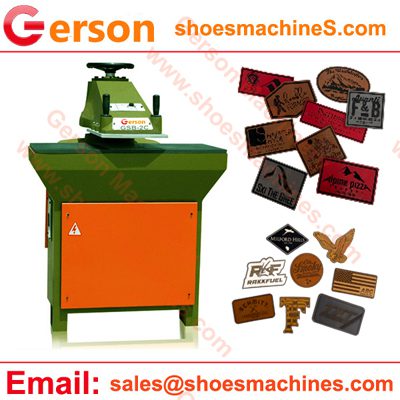
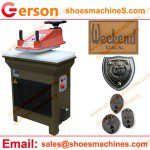
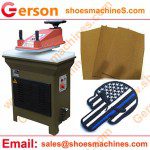
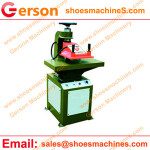
Leather Patch Die Cutting Machine are essential tools for creating leather patches for hats (Trucker Hats / Baseball Caps,Beanies,Snapbacks), bags, garments(Jackets (Denim, Canvas, Bomber, Leather),Jeans, T-shirts & Hoodies,Workwear ),shoes (sneakers, boots), o other Accessories items(Keychains and lanyards,Belts,Dog collars and leashes,Luggage tags,Bracelets) etc.,
Leather Patch Die Cutting Machine
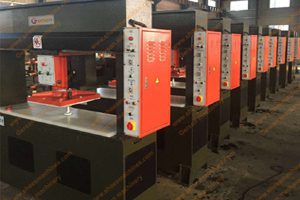
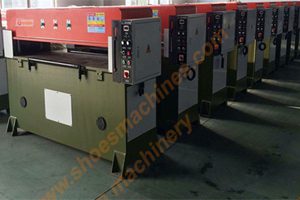
These machines use dies to cut materials into specific shapes and sizes with precision and accuracy.At its core, a leather patch die cutting machine utilizes a cutting die (a sharpened metal blade shaped into the desired patch design) and a die cutting press to apply significant pressure, forcing the die through the leather to create a clean, accurate cut. The goal is to produce identical leather patches quickly and efficiently.
How it works: This is the most traditional method. You use pre-made steel “clicker dies” that are shaped exactly like the leather patches you want to cut. The leather is placed on the cutting surface, the die is positioned, and then a die cutting press (manual lever or hydraulic) applies pressure to force the die through the leather, cutting out the shape.
Pros:
Speed and Efficiency: Once set up, it’s very fast for repetitive cuts, especially if you’re making many patches of the same shape.
Consistency: Produces perfectly identical patches every time.
Clean Cuts: Steel dies provide very clean, sharp edges.
Durability: Dies are long-lasting.
Handles Thick Leather: Can cut a wide range of leather thicknesses depending on the press’s power.
general specifications:
Leather Patch Die Cutting Machine Specifications
Model
Gerosn GSB,GRA,GR
Notes
Tonnage (Cutting Force)
10 to 30 Tons (10T, 15T, 20T, 22T, 27T are common models)
Crucial for cutting thickness and material density. Higher tonnage for thicker/denser materials or longer dies.
Cutting Table Size
Varies with Tonnage. Examples: 15″ x 30″ (380x760mm) to 24″ x 40″ (610x1000mm)
The usable area for placing material and dies. Determines maximum overall material size.
Head Size
Typically slightly smaller than table width. Examples: 14″x18″ to 20″x20″
The size of the platen that presses the die. Limits the largest individual die size.
Cutting Stroke
Adjustable, typically 1.5″ to 4″ (40mm to 100mm)
The vertical distance the head travels during a cut. Adjustable for different die heights.
Daylight Opening
4″ to 6″ (100mm to 150mm) (Clearance between head and bed when open)
Maximum height of die + material stack that can fit under the head.
Motor Power
0.75 kW to 3.0 kW (1.0 HP to 4 HP)
Powers the hydraulic pump. Higher tonnage presses require more powerful motors.
Electrical
110V/220V or 380V, 3-Phase, 50/60 Hz (some smaller units may be 1-phase)